
Rinamochana Ganapati: The Liberator from Debt
On this page
Introduction
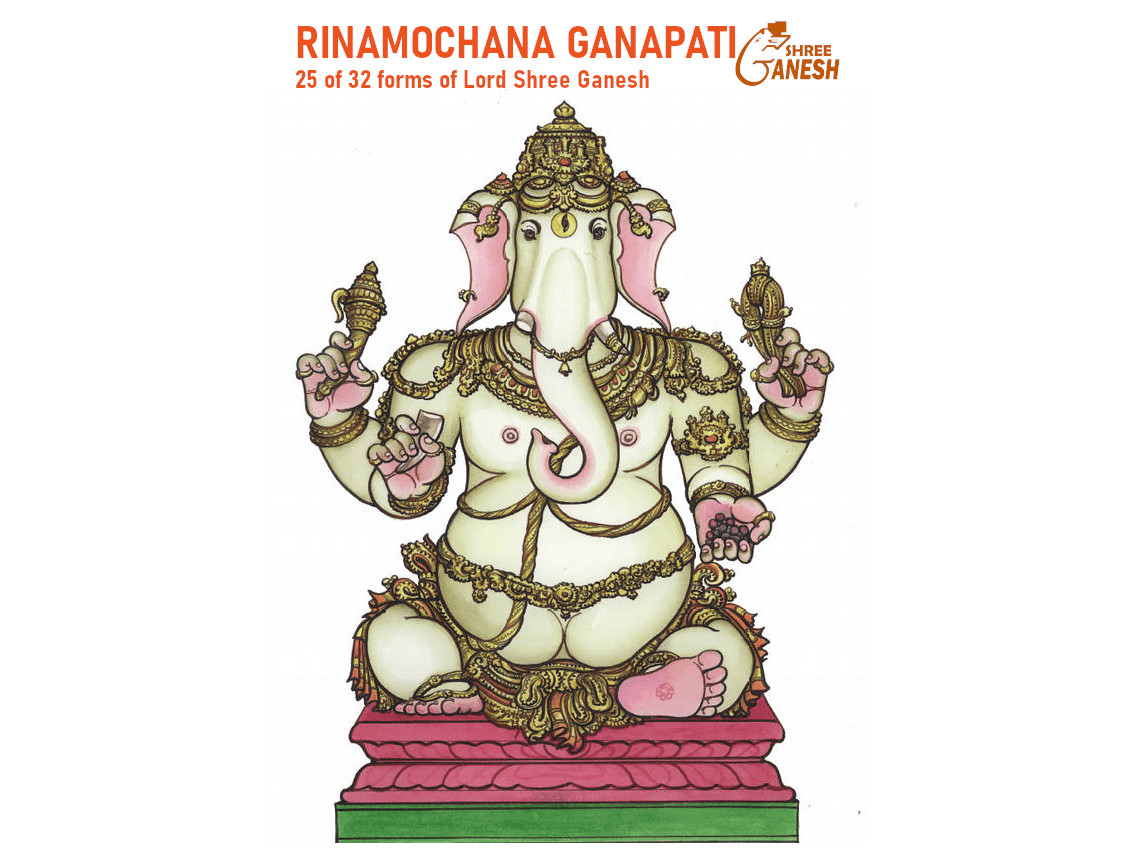
Rinamochana Ganapati (ऋणमोचन गणपति) is the 25th of the 32 forms of Lord Ganesha. He is humanity’s liberator from guilt and bondage. His figure of alabaster skin is apparelled in red silks. He bears a noose and a goad, his milk-white tusk and a favourite fruit, the rose apple.
His name joins rina, debt or obligation, with mochana, release. He is the Lord who frees his devotees from what they owe: from money owed, and from the deeper debts and burdens that weigh on the heart.
The 32 forms are listed in the Mudgala Purana, and their meditation verses and paintings are preserved in the Sritattvanidhi, a nineteenth-century treatise from the court of Mysore.
The Form of Rinamochana Ganapati
White as crystal, dressed in red
His meditation verse describes him as sphaṭika-prabha, shining like crystal: clear, pure and white as alabaster. He is dressed in red silk. White is the colour of purity and peace, the clean state of one who owes nothing; red is the colour of life and energy.
Four hands and what they hold
- A noose (pasha), which here can be read two ways: the bonds that hold us, and the Lord’s power to loosen them.
- A goad (ankusha), to spur the devotee to set things right.
- His milk-white tusk (danta), the sign of sacrifice.
- A rose apple (jambu), his favourite fruit, from the tree that gives its name to Jambudvipa, the ancient name for the land of India.
The Meditation Verse
पाशाङ्कुशौ दन्तजम्बू दधानः स्फटिकप्रभः ।
रक्तांशुको गणपतिर्मुदे स्यादृणमोचकः ॥
pāśāṅkuśau danta-jambū dadhānaḥ sphaṭika-prabhaḥ / raktāṃśuko gaṇapatir mude syād ṛṇamocakaḥ
In English: “Holding the noose and goad, his tusk and a rose apple, shining like crystal and clad in red: may Ganapati, the Releaser from Debt, bring us joy.”
The Debts We Are Born With
The idea of debt runs deep in Hindu thought. Vedic teaching holds that every person is born with three debts, the rina-traya:
- To the sages (rishi rina), repaid by study and passing on knowledge.
- To the gods (deva rina), repaid by worship.
- To the ancestors (pitri rina), repaid by raising a family and honouring those who came before.
Devotees see Rinamochana Ganapati as the one who helps them meet these obligations and be freed from them. In the same way, he is prayed to for release from the burden of karma: the debts carried from past actions, and the guilt that binds the mind.
Prayer for Release from Debt
Many devotees also turn to Rinamochana Ganapati for help with money owed. A hymn widely recited for this is the Rina Vimochana Ganesha Stotra, the hymn for release from debt. It is traditionally recited daily, with faith, as a prayer to clear what one owes and to be freed from poverty.
The Significance of Rinamochana Ganapati
Rinamochana Ganapati speaks to anyone who feels weighed down: by money owed, by duties not yet met, or by guilt over the past. His crystal-white form is a picture of what release feels like, clear and unburdened. His noose and goad say that release comes with effort as well as grace: he loosens the bonds, and spurs the devotee to do their part.
The 32 forms, Rinamochana Ganapati among them, are carved in stone at the Srikanteshvara temple in Nanjangud and the Chamarajeshvara temple in Chamarajanagar, both in Karnataka, and in the Pazhavangadi Ganapathy temple in Thiruvananthapuram, Kerala.
Conclusion
Rinamochana Ganapati, white as crystal and dressed in red silk, is the Lord who sets his devotees free. Holding noose and goad, tusk and rose apple, he releases them from debt and bondage of every kind, and his verse asks only that he bring them joy.
Frequently asked questions
- Who is Rinamochana Ganapati?
Rinamochana Ganapati (ऋणमोचन गणपति) is the 25th of the 32 forms of Lord Ganesha, humanity’s liberator from guilt and bondage.
- What does Rinamochana mean?
Rina means debt or obligation and mochana means release: the Lord who releases from debt.
- What does Rinamochana Ganapati hold?
A noose and a goad, his milk-white tusk and a favourite fruit, the rose apple.
- What are the three debts?
Vedic teaching holds that everyone is born with three debts: to the sages, repaid by study; to the gods, repaid by worship; and to the ancestors, repaid by raising a family.
- Why do devotees worship Rinamochana Ganapati?
For release from debts, both money owed and the deeper debts of karma, and from guilt and bondage.
Continue reading
About Lord Ganesha →
About Lord Ganesha
Pray to Lord Ganesha Online
About Lord Ganesha
Sankatahara Ganapati: The Dispeller of Sorrow
About Lord Ganesha